
Urbanie & Urbanus
Issue 2026 Aug
Empathetic and Inclusive Design
Issue 14, P. - P.
From “I Feel” to “Users Need” AI-Simulated Experience and the Construction of User Knowledge in Inclusive Architectural Design
Figures
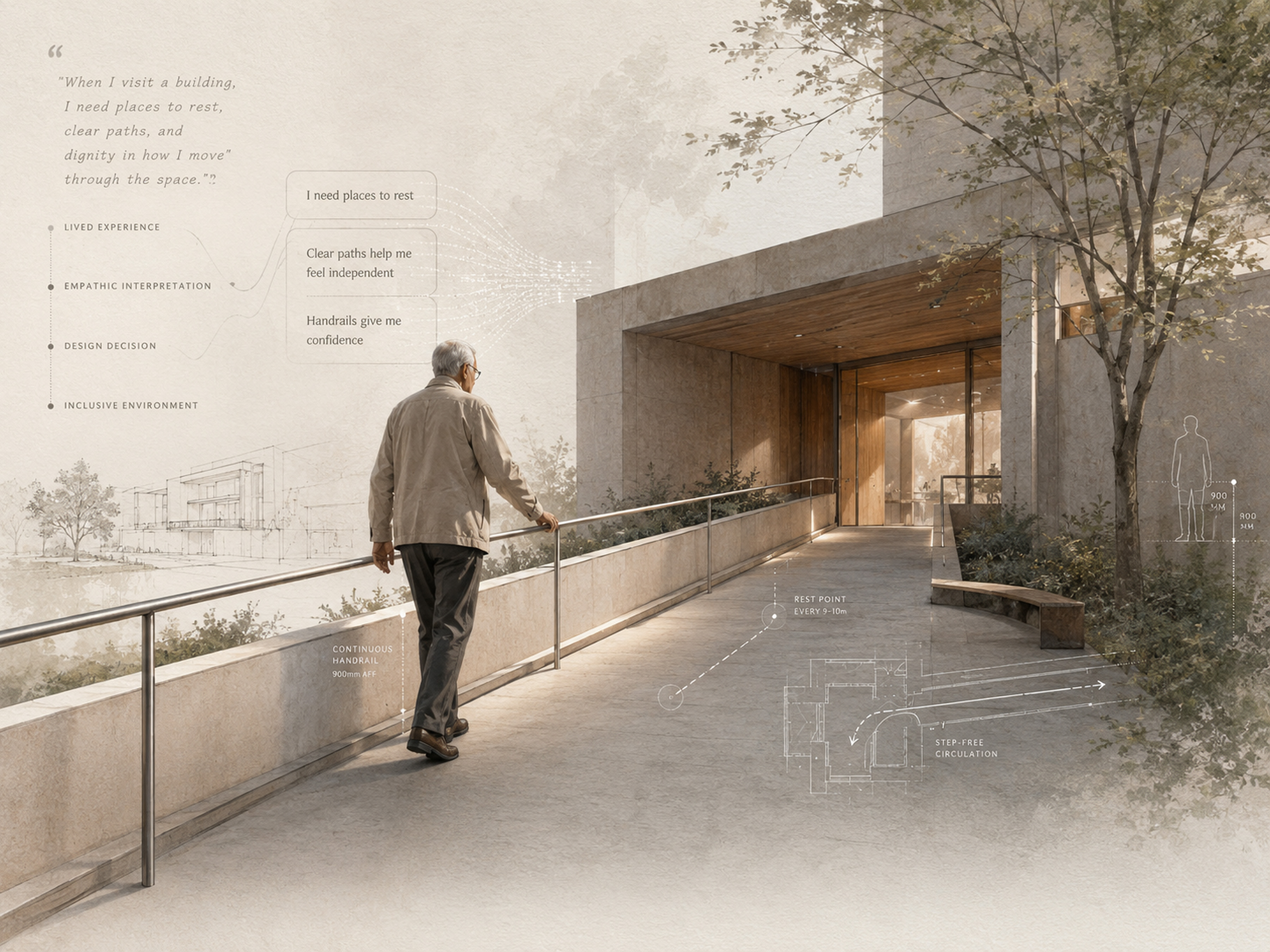
Opening Image. Conceptual illustration of testimonial-to-requirement transformation in empathetic and inclusive architectural design. AI-generated with OpenAI ChatGPT image, August 2026.
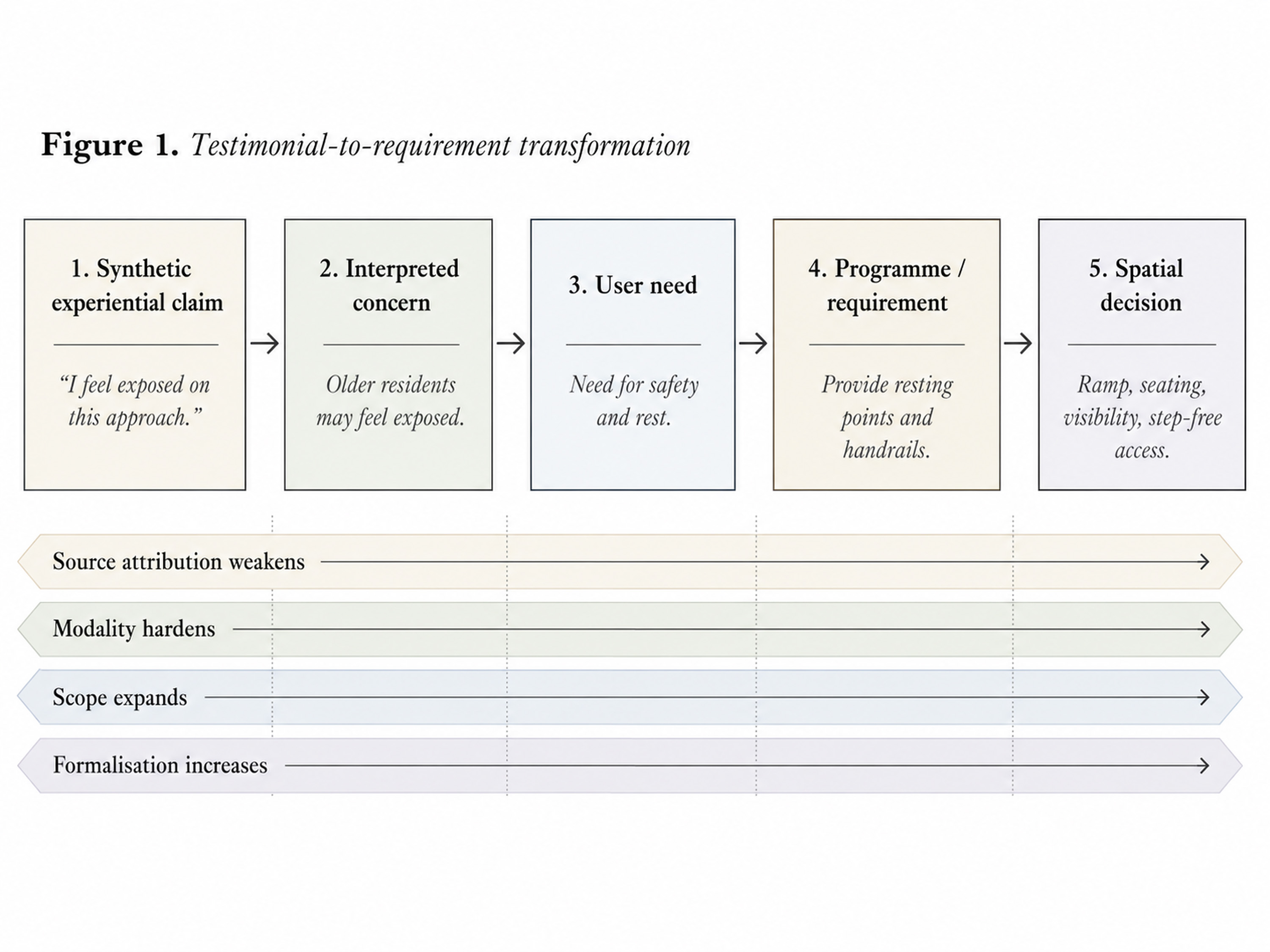
Figure 1. Testimonial-to-requirement transformation. A five-stage analytical sequence showing how a synthetic firstperson experiential claim can be interpreted, generalised and formalised as a user need, programme requirement and spatial decision. The lower bands identify potential shifts in source attribution, modality, experiential scope and formalisation. Concept and content: authors; visual generated with OpenAI ChatGPT image under author direction.
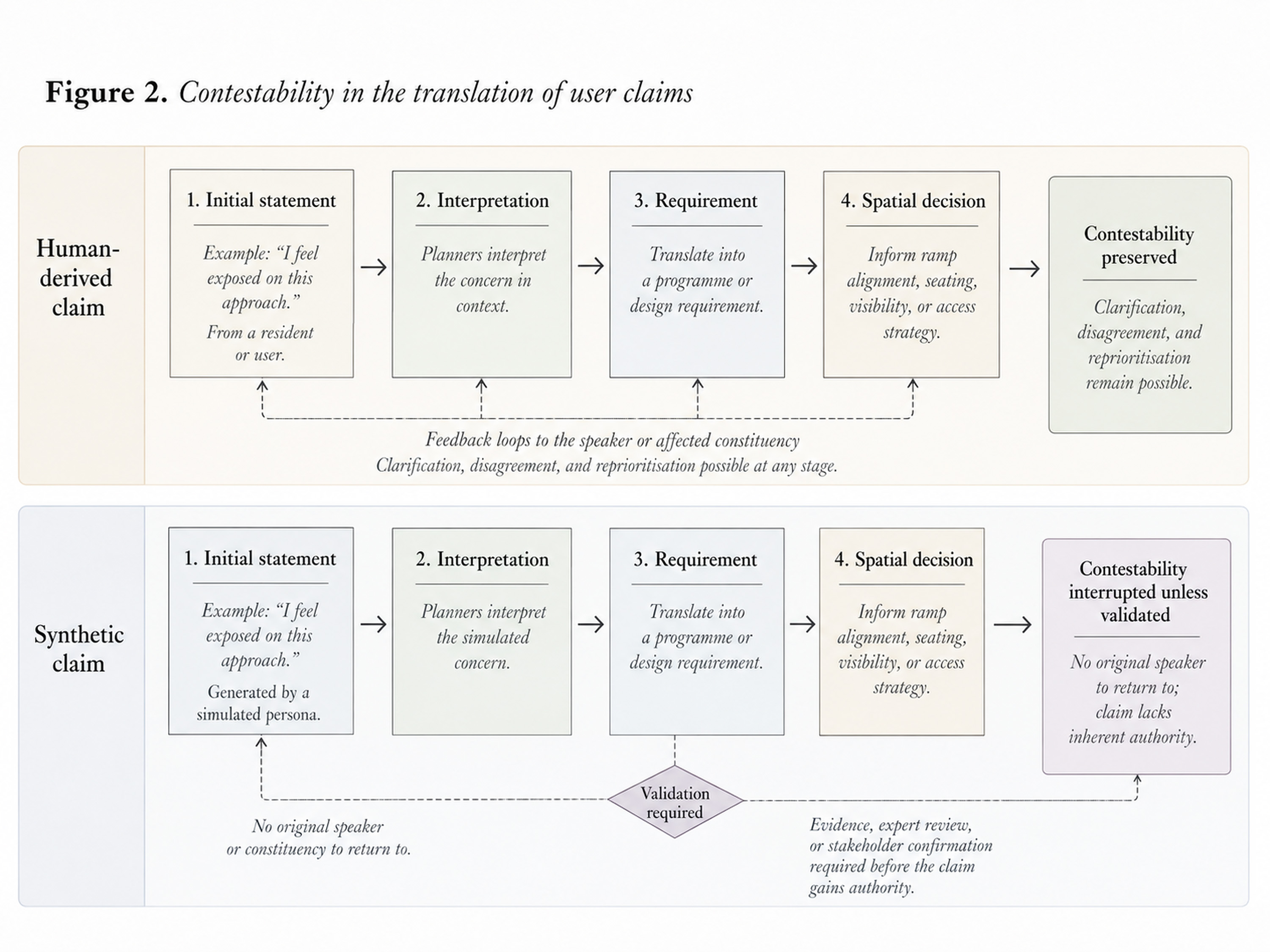
Figure 2. Contestability in the translation of user claims. Human-derived claims can, in principle, be returned to an affected speaker or constituency for clarification, disagreement and reprioritisation. Synthetic claims have no corresponding endogenous correction path, so validation requires deliberate re-entry of evidence, expertise or affected-user engagement. Concept and content: authors; visual generated with OpenAI ChatGPT image under author direction.
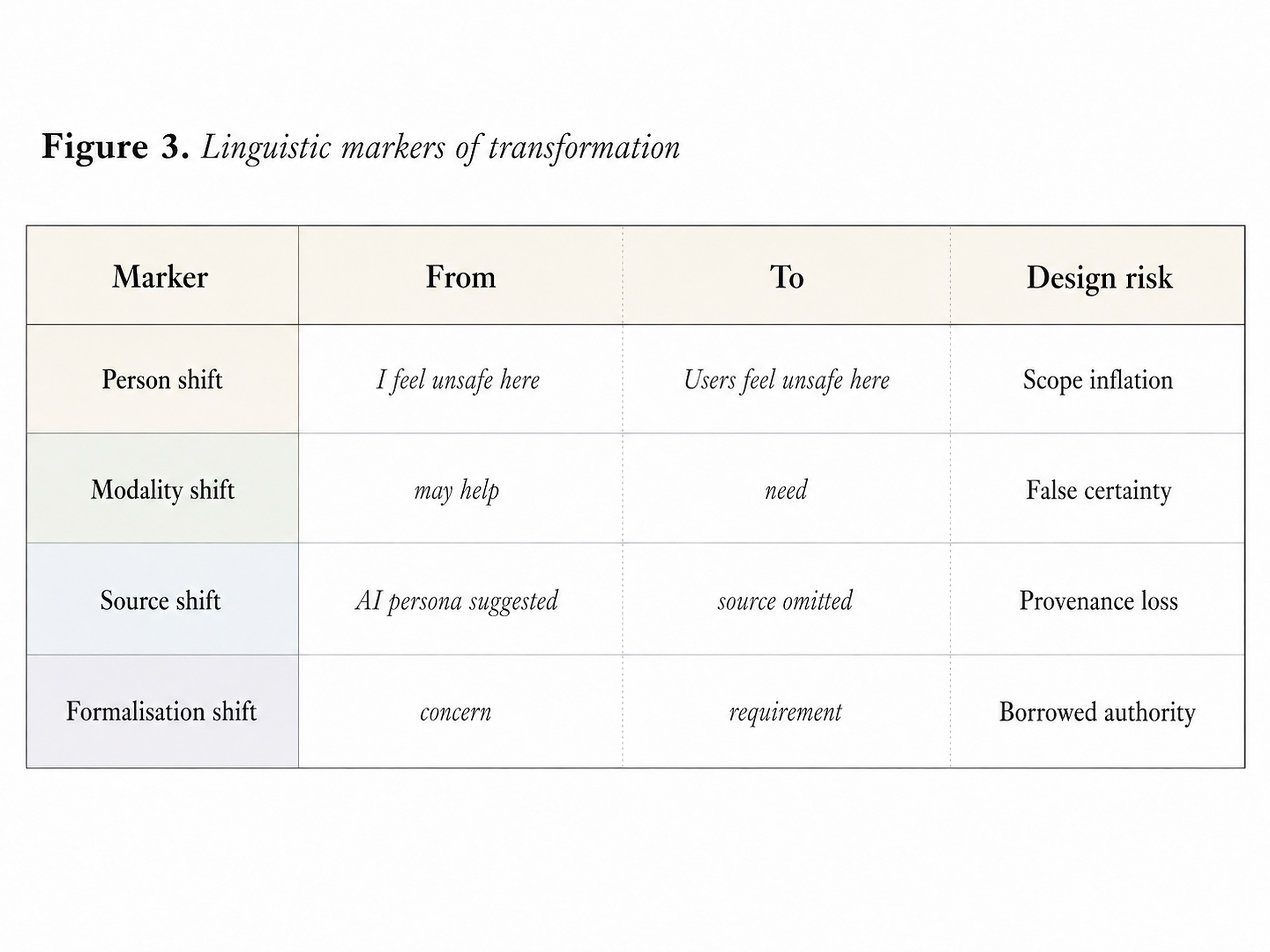
Figure 3. Linguistic markers of transformation. Illustrative shifts in person, modality, source attribution and formalisation that can signal a change in the epistemic status of an AI-generated user claim as it moves into design documentation. Concept and content: authors; visual generated with OpenAI ChatGPT image under author direction.
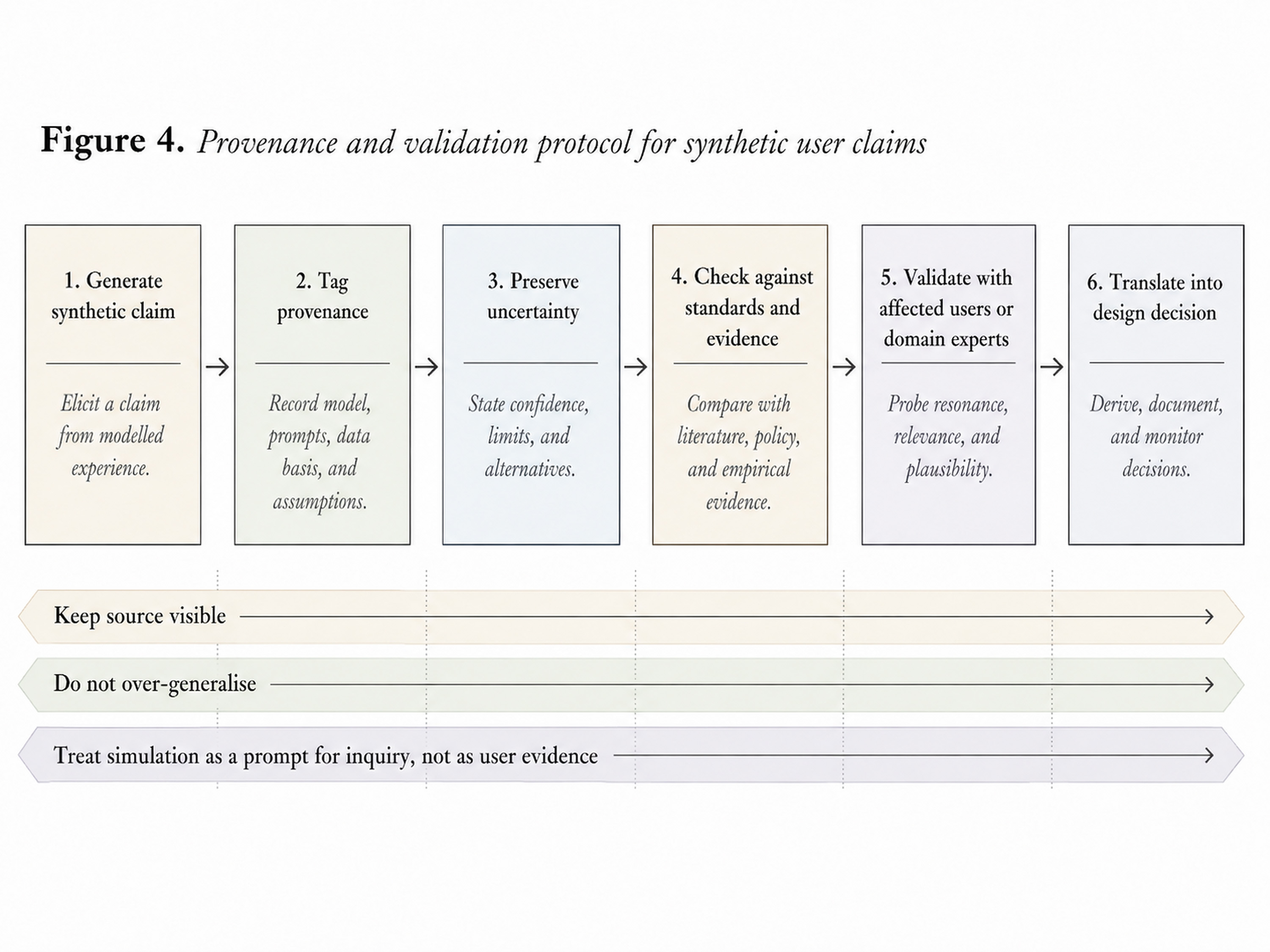
Figure 4. Provenance and validation protocol for synthetic user claims. A practical workflow for retaining provenance and uncertainty, checking claims against evidence and standards, validating them with affected users or relevant experts, and only then translating them into design decisions. Concept and content: authors; visual generated with OpenAI ChatGPT image under author direction.
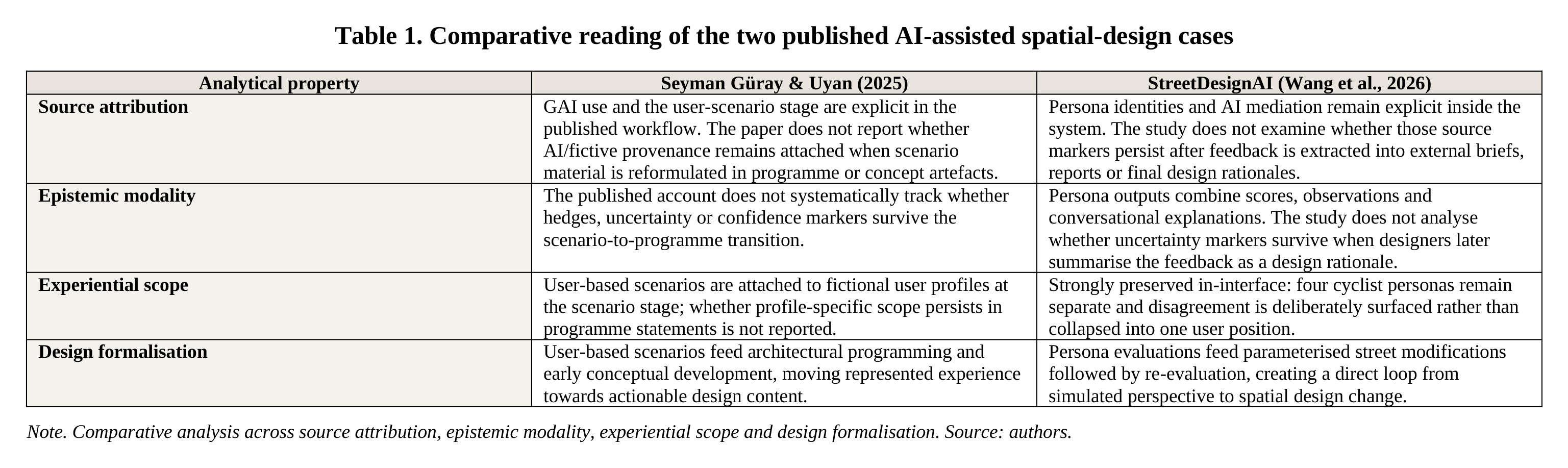
Table 1. Comparative reading of the two published AI-assisted spatial-design cases across source attribution, epistemic modality, experiential scope and design formalisation. Source: authors.